
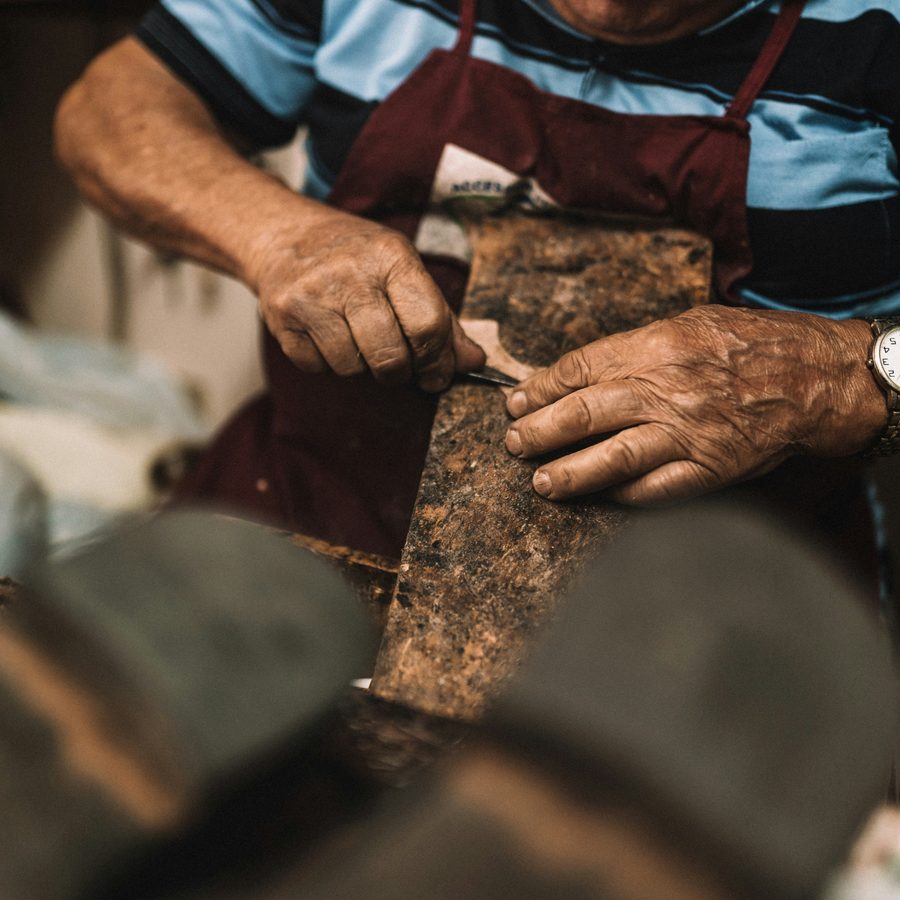
The Italian word is bottega: a workshop that is also a shop, where the person who made the object sells it. They are not hidden, but they do not advertise, and they are rarely on the main street.
The crafts and where they live
- Leather — Florence. Bags, belts, bookbinding. The Santa Croce district and the Oltrarno still hold real workshops among a great deal of tourist leather.
- Paper marbling and bookbinding — Florence and Venice.
- Glass — Murano. Ask for the Vetro Artistico Murano trademark; the alternative is imported glass sold beside the real thing.
- Ceramics — Deruta in Umbria, Vietri sul Mare on the Amalfi Coast, Caltagirone in Sicily, Faenza in Emilia. Four completely different traditions.
- Violins — Cremona. Around a hundred and fifty workshops in one small city, in an unbroken line from Stradivari.
- Tailoring — Naples. The sartoria napoletana: soft shoulders, unstructured jackets, and a genuine claim to being the best in the world.
- Shoes — the Marche for factories, Naples and Florence for bespoke.
- Gold — Arezzo and Valenza, where much of Europe's jewellery is actually made.
- Nativity figures — Via San Gregorio Armeno, Naples, all year round.
- Coral and cameo — Torre del Greco, near Naples.
- Copper — Abruzzo and Tuscany, for pans that outlive you.
If the shop has a card reader by the door and forty identical bags in the window, the maker is in China. If there is a bench at the back and a radio on, you have found it.
How to find the real ones
- Look one street back from the main shopping street, and on the side away from the cathedral.
- Search in Italian. bottega artigiana, laboratorio, fatto a mano, su misura. English searches surface shops that market to tourists.
- Ask a local, specifically. Not "where can I buy leather" but c'è un artigiano che lavora ancora a mano? — is there a craftsman who still works by hand. The question changes the answer.
- Look for the bench. A real bottega has tools, offcuts and work in progress.
- Ask to see it being made. Genuine artisans almost always say yes, and are pleased.
Buying well
Prices in a bottega are usually fixed and fair; haggling reads as an insult to the work. Commissions and repairs are normal, and shipping is routine. Ask quanto tempo ci vuole? — how long does it take — and expect weeks rather than days for anything made to measure.
Why this one really does need the language
Artisans are the least likely people in Italy to speak English, and the most rewarding to talk to. A conversation about how something is made, with the person making it, is close to the top of what learning Italian actually buys you — which is the whole premise of our culture course.