
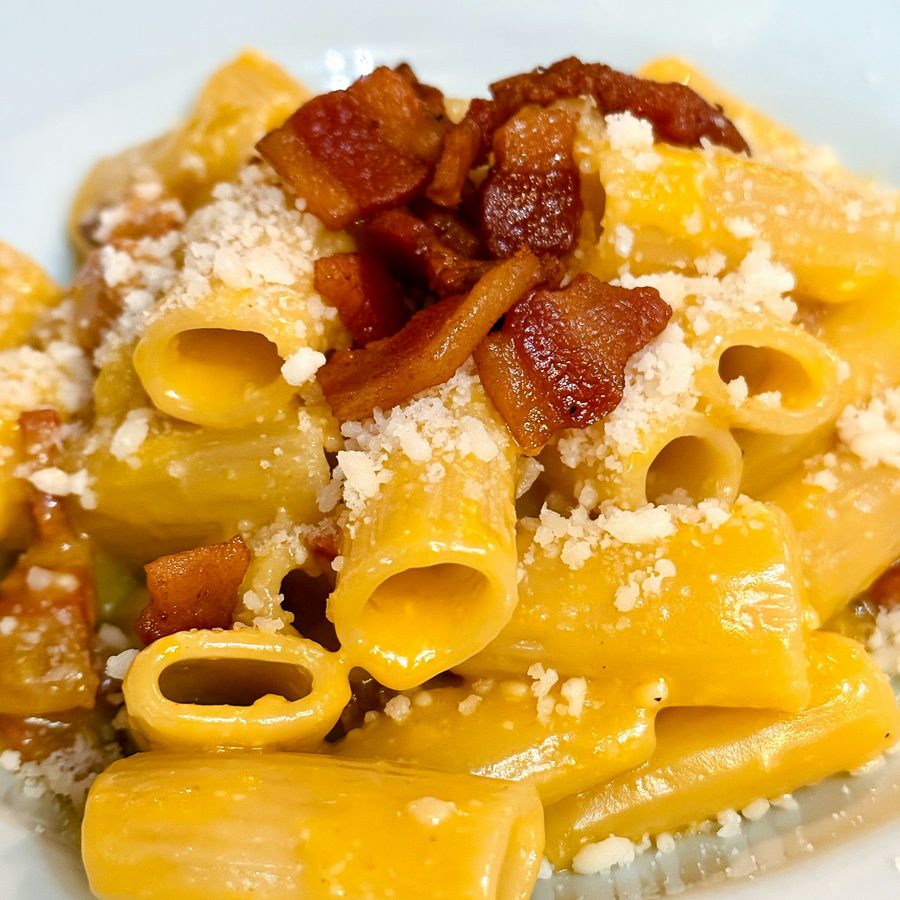
Carbonara contains guanciale (cured pork cheek), pecorino romano, egg and black pepper. Pasta and salt, and that is the entire recipe. No cream, no garlic, no onion, no parsley, no peas.
Why cream appeared anyway
The sauce is an emulsion: egg yolk, grated pecorino and starchy pasta water whisked off the heat into something glossy. Do it over direct heat and you get scrambled egg. Cream makes the dish forgiving — it will not split — which is exactly why it spread through restaurant kitchens abroad and never took hold in Rome.
The same logic explains most of the "wrong" versions of Italian dishes abroad. They are not corruptions so much as adaptations to different ingredients, different skill levels and different expectations.
Italian cooking is not a set of recipes. It is a set of local arguments, and everyone is convinced their grandmother settled theirs.
The other three Roman pastas
- Cacio e pepe. Pecorino, black pepper, pasta water. Three ingredients, and the hardest of the four to execute.
- Amatriciana. Guanciale, tomato, pecorino, chilli. From Amatrice, in the mountains east of Rome.
- Gricia. Guanciale and pecorino without egg or tomato. Effectively the ancestor of the other three.
Notice the pattern: the same two or three ingredients recombined. That is cucina povera, cooking built on what a poor region actually had.
Why the rules are so firm
Italy unified in 1861 and never fully consented to it culturally. Regional identity remained the real identity, and food is where it is expressed most fiercely. A recipe is not a suggestion; it is a claim about where you are from. This is why an Italian can be genuinely, personally upset about cream in carbonara, and why the argument is never really about dairy.
What Italians actually order
Whatever is local. In Rome, the four above. In Bologna, tagliatelle al ragù — never "spaghetti bolognese", which does not exist here. In Naples, pizza and seafood. In Sicily, pasta alla Norma and anything with almonds, citrus and swordfish. Ordering the regional dish is both the better meal and the better signal.
Asking che cos'è tipico qui? — what is typical here — is the single most useful sentence in an Italian restaurant. More in Italian for travel and how to order food in Italy.