
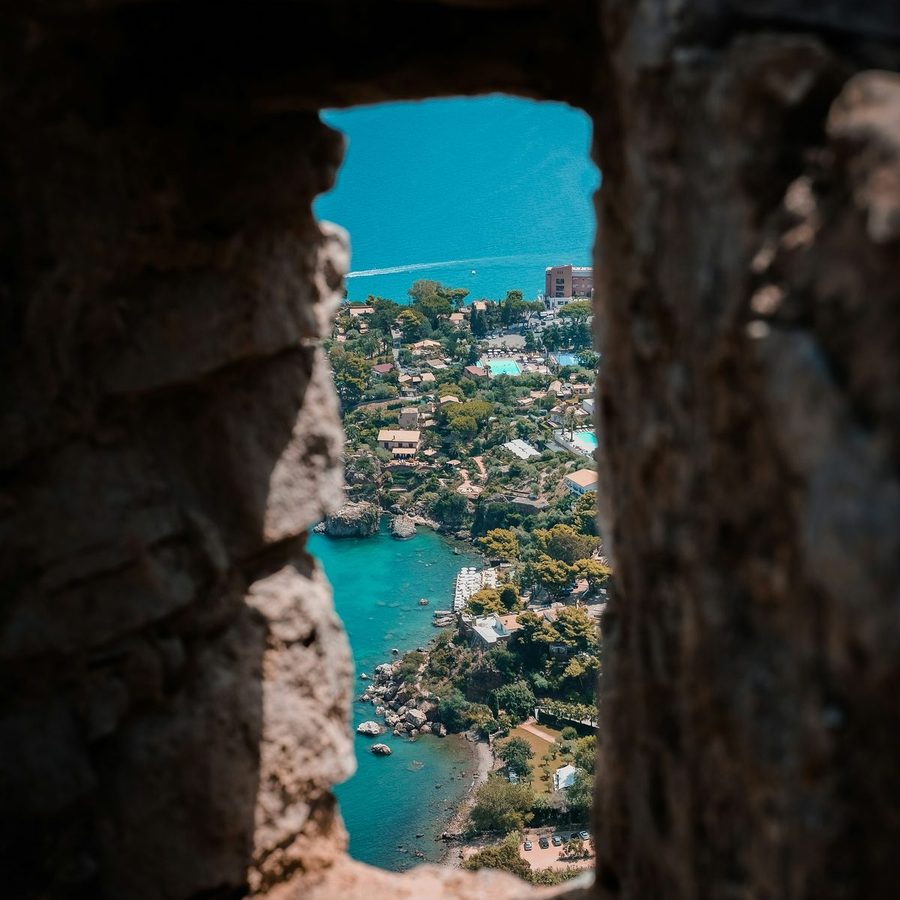
Italy has roughly 7,900 kilometres of coast, and international attention concentrates on perhaps eighty of them. The rest is where the country actually swims.
Sardinia, which is a category of its own
- Cala Goloritzé and Cala Mariolu on the Gulf of Orosei. Reachable by boat or a serious walk; among the clearest water in the Mediterranean. Access is capped, so book.
- Cala Coticcio on Caprera, nicknamed Tahiti locally.
- Spiaggia di Piscinas in the south-west, with genuine desert dunes behind it.
Puglia and the south
- Baia dei Turchi, near Otranto: pine forest, then sudden turquoise.
- Torre Guaceto, a protected marine reserve between Bari and Brindisi with almost no development.
- Marina di Camerota in Cilento, south of the Amalfi crowds and better for it.
- Tropea and Capo Vaticano in Calabria: white sand, a cliff town, and a fraction of the Amalfi price.
Sicily and the islands
- Cala Rossa, Favignana. Quarried rock and impossibly blue water.
- Vendicari, a reserve near Noto with beaches between salt pans and a ruined tuna factory.
- Filicudi and Alicudi, the Aeolian islands nobody visits: swimming off rocks, no cars, effectively no tourism.
The north, for completeness
Punta Mesco and the coves around the Cinque Terre, best reached on foot. And in Tuscany, Cala Violina, a capped-access bay in the Maremma with a twenty-minute walk in through pine woods.
The signal is always the same: no coach park, a dirt track, and one shack selling panini with exactly one filling.
How the Italian beach actually works
- Stabilimento or spiaggia libera. A stabilimento is a private beach club renting sunbeds and umbrellas by the day. A spiaggia libera is free public beach. Both exist, often side by side.
- Lettino e ombrellone — sunbed and umbrella. €20–40 a day in most places, considerably more in fashionable ones.
- Reserve in August. Popular clubs are booked, sometimes for the season.
- Capped beaches need booking. Cala Goloritzé, Cala Violina and others now limit daily numbers.
- Ferragosto, 15 August, is the single busiest day of the Italian year at the coast. Avoid.
Words that help at the shore
C'è posto per due? — is there space for two. Quanto per un ombrellone e due lettini? — how much for an umbrella and two sunbeds. Si può nuotare qui? — can you swim here. La bandiera rossa — the red flag, meaning do not. These are ordinary travel Italian, and on an unstaffed beach with no English they matter.